You’ve probably seen someone with a really cool Instagram bio or gaming username.
Something like:
𝐌𝐲 𝐂𝐨𝐨𝐥 𝐍𝐚𝐦𝐞
or
𝓜𝔂 𝓒𝓸𝓸𝓵 𝓝𝓪𝓶𝓮
And thought, “Okay, I want something like that too.”
So you open a fancy text generator, type your name, pick a style, and copy it.
Pretty simple.
But then a question pops into your head.
“Wait, can using fancy text actually get my account banned?”
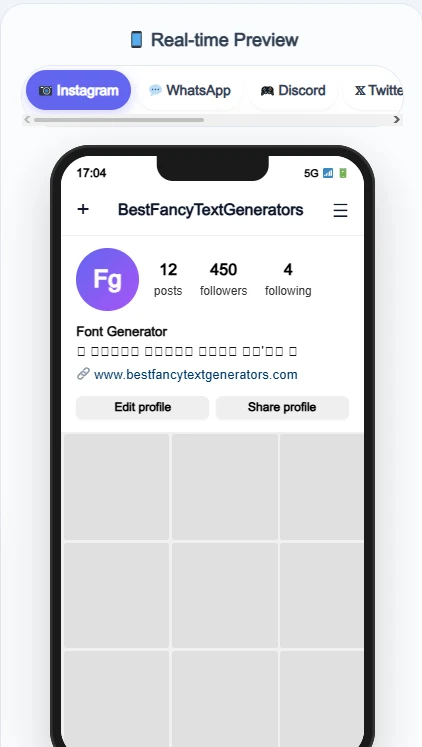
Or maybe you’ve already tried pasting a fancy username somewhere, and the app wouldn’t accept it.
So what’s going on?
Quick answer: Fancy text isn’t automatically against social media platform guidelines. Using decorative Unicode characters in your bio, display name, caption, or other supported fields is generally not a problem by itself.
But things can get complicated when those characters are used to impersonate someone, spread spam, mislead people, or get around platform restrictions.
And some platforms simply don’t allow certain characters in their usernames.
So the important thing isn’t just how fancy your text looks.
It’s where you’re using it and what you’re using it for.
Let’s make that a little easier to understand.
First, Why Isn’t Fancy Text Automatically Against the Rules?
Most fancy text generators don’t actually install new fonts on your phone.
Instead, they use different Unicode characters to make ordinary text look decorative.
For example:
- Normal: Hello
- Bold: 𝐇𝐞𝐥𝐥𝐨
- Script: 𝓗𝓮𝓵𝓵𝓸
- Double-struck: ℍ𝕖𝕝𝕝𝕠
- Monospace: 𝙷𝚎𝚕𝚕𝚘
These look like different fonts.
But many of the letters are actually different Unicode characters.
The Unicode Standard defines how these characters are represented digitally.
And Unicode isn’t some suspicious technology.
We use Unicode for ordinary text, different languages, symbols, and many of the characters we see online every day.
So simply using a decorative Unicode letter doesn’t mean you’re doing something wrong.
The problem starts when you try using those characters in ways a particular platform doesn’t allow.
5 Ways Fancy Text Can Cause Problems With Platform Guidelines
Not every problem with fancy text is a policy violation.
Sometimes it’s just a technical limitation.
But there are situations where the way you use it can become a problem.
1. Using Fancy Text to Impersonate Someone
Imagine you follow your favourite creator on social media.
One day, another account appears with almost the same name.
Same profile picture.
Similar bio.
Even the username looks nearly identical.
But something is slightly different.
Maybe one letter has been replaced with a Unicode character that looks just like the original.
This is possible because some Unicode characters from different writing systems look very similar.
For example:
A — Latin capital letter A
А — Cyrillic capital letter A
They look almost identical in many fonts.
But they’re different characters.
These are sometimes called Unicode lookalikes or confusables.
The problem isn’t that these characters exist.
The problem is when someone deliberately uses them to deceive people.
For example, creating a profile that makes visitors believe they’re interacting with another creator, company, or official account.
What should you do?
Use fancy text to make your own identity different.
Don’t use it to pretend you’re someone else.
2. Trying to Hide Spam or Misleading Messages
Let’s say a platform doesn’t allow a particular type of spammy message.
Changing the letters into decorative Unicode characters doesn’t automatically make that message acceptable.
The same goes for misleading promotions, repeated unwanted messages, or content that violates other platform rules.
For example, if someone is using unusual characters to disguise a deceptive message, the styling doesn’t change what the message is trying to do.
This is a pretty simple rule:
Fancy text changes how something looks. It doesn’t automatically change whether the message is allowed.
So if you’re using fancy text for a normal bio or caption, that’s one thing.
If you’re using it to hide prohibited behaviour, that’s completely different.
3. Using Characters That Aren’t Allowed in Usernames
Here’s where things get confusing.
A platform might allow fancy Unicode text in your display name or bio but reject it in your username.
Wait, aren’t those basically the same?
Not really.
Your username is often the unique identifier people use to find or mention your account.
Your display name is the name other users see on your profile.
Platforms can have different rules for each.
For example, TikTok’s username guidance limits usernames to letters, numbers, underscores, and periods, with additional placement restrictions.
Discord also has separate rules for usernames and display names. Its usernames have stricter character requirements, while display names offer more flexibility.
So if you try using:
𝓜𝔂𝓝𝓪𝓶𝓮
in a field that doesn’t accept those characters, the platform may simply reject it.
That doesn’t automatically mean you’ve violated a community guideline or that your account is about to be banned.
It may just mean that particular field doesn’t support the characters you entered.
4. Making Your Profile Hard to Read
This one isn’t always a direct policy issue, but it’s still worth thinking about.
You find a really decorative style.
Then you start using it everywhere.
Your name is fancy.
Your bio is fancy.
Your captions are fancy.
Even your important contact information is fancy.
At first, it might seem cool.
But imagine someone trying to read an entire paragraph written like this:
𝓣𝓱𝓲𝓼 𝓲𝓼 𝓪 𝓿𝓮𝓻𝔂 𝓵𝓸𝓷𝓰 𝓼𝓮𝓷𝓽𝓮𝓷𝓬𝓮.
Not exactly the easiest thing to read, right?
Decorative Unicode characters can also create accessibility issues.
Some screen readers may announce individual Unicode character names differently from ordinary letters.
That can make content more difficult for people using assistive technology.
For a gaming name or short decorative phrase, you might decide that a fancy style fits.
But for important instructions, prices, or contact details, normal text is usually a better idea.
Use fancy text to add personality, not to make people struggle to understand you.
5. Using Styles That Don’t Work on the Platform
Let’s say you’ve found a style that looks amazing inside a generator.
You copy it.
Paste it into your profile.
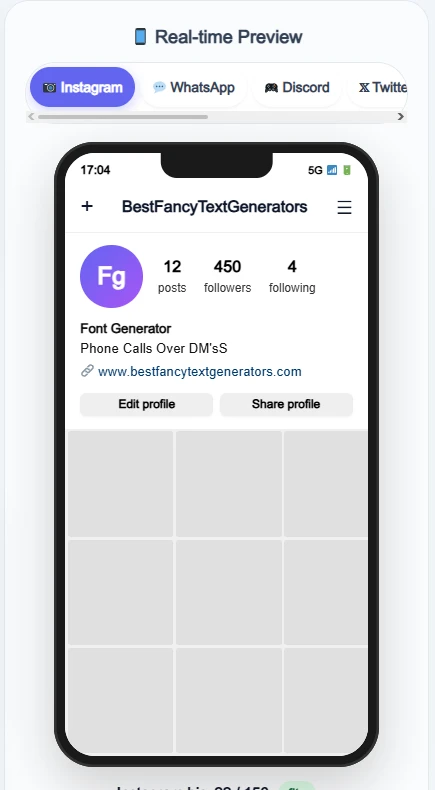
And suddenly: □□□□
Or maybe only some letters appear.
Annoying.
But here’s the important distinction.
A character not displaying correctly isn’t automatically a platform-policy violation.
It may simply mean the device or app can’t display that particular Unicode character.
Different devices and apps don’t always have identical font support.
And some platforms restrict which characters can be entered in particular fields.
So if your text looks broken, try another style.
You don’t need to assume the platform is punishing your account.
Username Restrictions vs. Account Violations: What’s the Difference?
These two things sound similar, but they’re not.
| What happens | What it usually means |
|---|---|
| Your fancy username is rejected | The field may not allow those characters |
| A letter appears as a box | The character may not display properly |
| Your profile name looks different on another device | Fonts or rendering systems may differ |
| Your account imitates another creator | It may violate impersonation rules |
| You use fancy characters to disguise spam | The underlying behaviour may violate spam policies |
| A platform removes your content or restricts your account | The platform may have taken an enforcement action |
A rejected username is generally a field-validation issue, not proof that your account has received a penalty.
Enforcement is different.
Depending on the platform and violation, enforcement could involve content removal, warnings, feature restrictions, account suspension, or other actions.
And the exact consequences depend on the platform’s current policies.
What Do Different Social Media Platforms Allow?
There’s no single set of fancy-text rules that every platform follows.
Here’s what you should know before using decorative text.
| Platform | What to keep in mind |
|---|---|
| Bios, display names, and usernames can have different character rules. Check whether the intended field accepts the style | |
| Follow identity and authenticity rules. Avoid using lookalike text to impersonate other people or businesses | |
| TikTok | Usernames have defined character restrictions; nicknames are a separate field |
| Discord | Usernames have stricter character limits than display names, which can support more special characters |
| YouTube | Handles follow specific naming rules, and misleading impersonation is prohibited |
A few useful official resources:
TikTok: Changing your username
Discord: New Usernames & Display Names
YouTube: YouTube handle guidelines and impersonation policy
These are important distinctions because a character restriction and a community-guideline violation are different things.
Also, rules can change. Always check the latest guidelines for your specific platform and account field.
How to Use Fancy Text Without Creating Problems?
You don’t need to become a Unicode expert.
And you definitely don’t need to read every technical document just to make your Instagram bio look cooler.
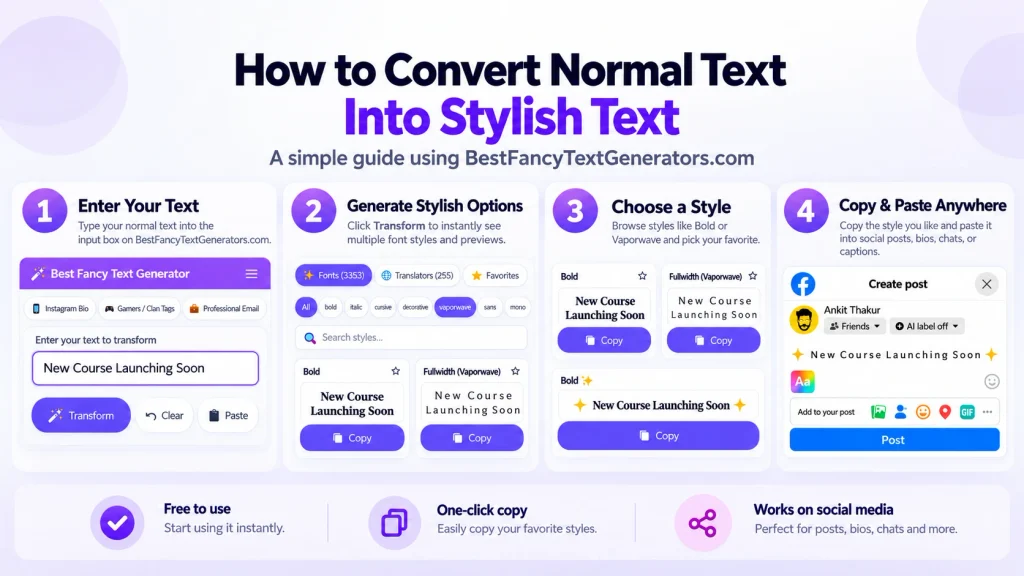
I’d keep it to a few simple steps.
Step 1: Start With Your Own Text

Decide what you’re actually trying to style.
Maybe it’s your name.
Maybe it’s a short bio.
Or maybe you just want a cool gaming username.
For example:
My Cool Name
Step 2: Try Different Styles

Open a Fancy Text Generator and enter your text.
Compare different styles instead of choosing the first unusual-looking option.
For example:
- 𝐌𝐲 𝐂𝐨𝐨𝐥 𝐍𝐚𝐦𝐞
- 𝓜𝔂 𝓒𝓸𝓸𝓵 𝓝𝓪𝓶𝓮
- 𝕄𝕪 ℂ𝕠𝕠𝕝 ℕ𝕒𝕞𝕖
Pick something you like and can actually read.
Step 3: Check the Actual Platform
Copy the style and paste it into the intended field.
If it’s for an Instagram bio, check it there.
If it’s for a gaming username, check the game’s character rules.
If it’s for a YouTube handle, make sure it meets YouTube’s naming requirements.
The generator preview can help you choose a style.
But it can’t guarantee that every external platform will accept the characters.
Step 4: Make Sure It Doesn’t Mislead Anyone
Ask yourself:
“Could this name make people think I’m somebody else?”
If yes, reconsider it.
There’s a difference between creating a cool identity and copying another person’s identity.
Step 5: Keep Important Information Readable
A fancy heading can look great.
A completely decorated paragraph full of important information?
Maybe not so much.
Keep contact details, instructions, official information, and important announcements easy to understand.
Step 6: Check Before You Save or Publish
If the text looks broken or the platform rejects it, try another style.
And if you’re unsure whether a particular use might violate community guidelines, look at the platform’s current rules.
What We Learned While Building BestFancyTextGenerators.com
This actually connects with something we learned while building our own fancy text generator.
The whole idea started with a simple thought:
“I want my name to look different.”
We searched for fancy text generators and found plenty of websites.
But many of them offered surprisingly similar styles.
So we began looking for Unicode combinations that weren’t commonly available.
And that’s when we discovered something important.
Not every fancy-looking style was actually worth keeping.
Some characters didn’t render properly. Others looked different depending on where they were displayed.
Instead of adding every style just to increase the number, we started filtering out combinations that didn’t work as expected.
Eventually, our collection grew to 2,000+ styles.
But having thousands of choices created another challenge.
How would someone find a gaming style or an aesthetic name without scrolling forever?
That’s why we added categories, search, and real-time previews.
The lesson was pretty simple:
More styles don’t automatically mean a better experience.
And that lesson matters here too.
A fancy text style isn’t useful if it doesn’t work where you’re using it.
That’s why checking the final result matters just as much as choosing something that looks cool.
Frequently Asked Questions
Can Fancy Text Get My Instagram Account Banned?
Fancy text alone doesn’t automatically mean an account will be banned. However, using decorative characters for impersonation, spam, deception, or other prohibited behaviour may create enforcement risks.
Why Doesn’t Instagram Accept My Fancy Username?
Username fields can have stricter character requirements than bios or display names. If a decorative Unicode character is rejected, try ordinary letters or another permitted character.
Is Fancy Text Allowed in TikTok Usernames?
TikTok has specific username character rules. Decorative Unicode characters that fall outside its permitted set may be rejected. Check TikTok’s current username guidance before choosing a name.
Can I Use Fancy Unicode Characters in My Discord Name?
Discord has different requirements for usernames and display names. Display names generally offer more flexibility, but both remain subject to applicable restrictions and community rules.
Does YouTube Allow Fancy Text in Channel Names?
YouTube distinguishes between channel names and handles. Handles have their own character rules. YouTube also prohibits deceptive impersonation, including attempts to imitate other creators through special fonts or similar-looking identities.
Is Fancy Text Considered Spam?
Not simply because it looks decorative. But changing text into fancy characters doesn’t make otherwise prohibited spam acceptable.
Can Unicode Text Be Used to Impersonate Someone?
Yes. Some Unicode characters look similar to ordinary letters, and they can be misused to create confusing account names. Avoid copying someone else’s identity or making your account appear official when it isn’t.
Does Fancy Text Work on Every Social Media Platform?
Not necessarily. Compatibility depends on the characters, device, app, and text field being used. Test your chosen style where you intend to publish it.
Final Thoughts
So, can fancy text break social media platform guidelines?
Yes, depending on how it’s used. But fancy text itself isn’t automatically against the rules.
There’s nothing unusual about wanting your Instagram bio, gaming name, or profile to look a little different.
That’s part of why fancy text is fun in the first place.
Just remember that changing the appearance of your text doesn’t give you permission to impersonate someone, hide spam, or ignore platform restrictions.
And if a particular style doesn’t work, you can always choose another.
When we started building BestFancyTextGenerators.com, the goal was to help people find something that made their text feel unique.
That hasn’t changed.
But there’s one thing we learned along the way:
Looking different is cool. Looking different without confusing people or breaking the rules is even better.
Related Articles:
- Is Unicode Text Safe for Social Media Platforms?
- Ethical Use of Stylish Fonts in Branding & Content
- Are Fancy Fonts Legal for Commercial Use?
- Why Unicode Fonts Are Not Supported Everywhere

Ankit Thakur is an SEO Specialist and WordPress Developer with 4+ years of experience. He has generated ₹60L+ in revenue through SEO, built 50+ websites, and helped businesses generate measurable leads through organic search and local SEO.